Best Scarlet Macaw For Sale
Sale!


Description
Best Palm Cockatoo For Sale
The largest cockatoo, the black palm cockatoo or goliath cockatoo, is strikingly beautiful. This species is not naturally affectionate. However, with extensive training, hand-fed black palm cockatoos can make excellent, tame pets. This species thrives when it is socialized. Like other cockatoos, it craves regular interaction with its owners. This bird’s large size, beak strength, and uneven temperament make it most suitable for experienced bird owners. These bold parrots require a fearless owner to match.
Species Overview
COMMON NAMES: Black palm cockatoo, palm cockatoo, goliath cockatoo, great black cockatoo, Van Oort’s palm cockatoo, black macaw
SCIENTIFIC NAME: Probosciger aterrimus
ADULT SIZE: 22 and 24 inches, weighing between 2 and 3 pounds
LIFE EXPECTANCY: Between 40 and 60 years in the wild; up to 80 to 90 years in captivity with proper care
Origin and History
The black palm cockatoo is native to Australia, particularly the very tip of northern Queensland. Also, this species now lives in New Guinea and Indonesia. These birds generally inhabit the rainforest and woodlands and nest in hollow trees. It is common to find them in small groups of six or fewer birds. A pair will mate for life. Though their population is declining due to habitat loss as well as sport and trade hunting, they are not considered endangered or even vulnerable.
Temperament
The black palm cockatoo can be a good pet, but don’t expect it to be as affectionate as many other parrots. To tame this species, the bird requires a lot of attention and consistent training. It is a brilliant and social bird, so if you are persistent, you can get this bird to follow your commands. You can teach this species to perform many simple tricks with time and positive reinforcement.
This is one of the very few bird species that will use tools. In their natural habitat, male birds will use a large stick to “drum” against a hollow tree before choosing where to build a nest. This drumming can be heard for up to 100 yards. When the stick breaks, it becomes part of the new nest. This behavior puzzles many scientists who study birds. Some scientists believe the females listen to the drumming, then decide if it’s a suitable nesting spot. Other scientists believe it is the sign of a male marking its territory.
Speech and Vocalizations
This bird’s natural vocalizations have a human-like sound, including their signature “hello.” Their vocal ability is well suited for learning words. They are one of the best talking cockatoos.
A black palm cockatoo is not a good option for bird owners who live in apartments or condominiums. It makes very distinct, deafening calls, and you (and your neighbors) need to be able to tolerate loud noises to live with one.
Black Palm Cockatoo Colors and Markings
The black palm cockatoo is a very dark, smoky gray color that appears blacker on some birds than others. The same color appears on their very long crest, as well as their feet and legs.
This otherwise single-colored bird has bright red patches of bare skin on their cheeks, which change colors when the bird gets excited. Their cheeks are as striking as its dark grayish-black beak, giving it a very distinct profile up close.
The size of its beak makes it look intimidating. Within the parrot family, their beak is only eclipsed in size by the hyacinth macaw. The size and shape of the beak, and the fact that the upper and lower mandibles don’t meet, makes it perfect for cracking open nuts. Their strong beaks can cause injury. This species is not recommended for families with children.
This bird is a monomorphic species, meaning there is no visual way to tell males from females. If you want to determine sex, genetic or surgical sexing is necessary.
Caring for Black Palm Cockatoos
Though there is some appeal to these birds in the exotic pet trade, they are not as common as other cockatoos. Generally, they are seen most often in zoos, professional aviaries, and bird shows. This exclusivity is mostly due to their temperament and extensive care and training requirements.
Black palm cockatoos should not be left alone for more than eight hours a day. This species is not the right choice if you maintain regular obligations outside of the home for long periods.
The black palm cockatoo requires a large enough cage to accommodate flight and play. The cage should be at least 10 feet long, 6 feet wide, and 6 feet high. If you cannot accommodate a cage this size or an aviary, it is best to consider one of the smaller cockatoo species.
These powder-down parrots enjoy baths and should regularly get the opportunity to get wet. The natural dust shed by this bird can coat the nearby surfaces and trigger allergies for those sensitive to dust or animal dander.
This bird’s long lifespan serves the breed well because it usually lays one egg every two years or so. Among the parrots, it has one of the lowest reproduction rates.
Common Health Problems
Though it is a large bird, it is light for its size and prone to obesity in captivity. Other common ailments that can affect these birds include kidney problems, bacterial infections, and psittacine beak and feather disease (PBFD), a viral condition.
If the bird does not receive sufficient mental stimulation, it can develop behavioral issues such as feather plucking or excessive screaming.
Diet and Nutrition
In the wild, black palm cockatoos often feed in the early morning hours. Its native diet is palm fruit, nuts from the kanari tree (Java almond), stringy eucalyptus tree bark, and tree seeds. Their strong beak can open the toughest nuts.
Like all cockatoos, black palm cockatoos can easily become overweight, so owners should carefully supervise their fat intake. Half of its menu should consist of high-quality pellets, and the other half should be fresh bird-safe fruits and vegetables. Occasionally feed nuts in the shell; this will exercise their beak. Keep nuts to a minimum, though, as most are high in fat.
Start by offering your bird 1/3 cup of pellets and 1/3 cup of fruits and vegetables daily. Increase the amount as needed. Never feed chocolate or avocado; these foods are toxic to birds.
Exercise
Being large birds, they need lots of exercise to maintain their physical health. Make sure that your bird is allowed a minimum of three to four hours outside of its cage each day so it can stretch its muscles, play, and socialize with you. These birds require regularly scheduled time for training.
These birds are curious. Make sure you supervise them when outside of the cage to prevent accidents and unwanted chewing on your household goods, furniture, or walls. Be mindful of electric wires around the house; these are potentially hazardous if your bird chews on them.
Toys provide enrichment and will keep the bird occupied. Provide plenty of stimulation with wood toys, ropes, and other things the bird can chew on. Always have more toys readily available when they get destroyed. Rotate toys in and out as the bird loses interest. Playstands, perches, ladders, and swings can also help your bird burn off excess energy.
- Beautiful, impressive-looking bird with unique drumming ability
- One of the best speaking cockatoos
- Can learn to do many tricks
- Long-lived species
- Can be noisy, not well-suited for apartments
- Requires at least 3 to 4 hours of supervised out-of-cage time
- Emits powdery down that can aggravate allergies
- Requires a room-sized cage or aviary


Description
Best Sulphur Crested Cockatoo for Sale
The sulphur crested cockatoo for sale is one of the largest of the several species of beautiful white cockatoos. It is a different species than the lesser sulphur-crested cockatoo. Although spectacular in appearance, this huge, active parrot is brilliant, long-lived, and noisy; and it is very challenging to keep as a pet. This bird expects a lot from its owner and it is recommended only for experienced owners who are up to the task. For a motivated owner, the sulphur-crested is a once-in-a-lifetime pet.
Breed Overview
COMMON NAMES: Sulphur-crested cockatoo, greater sulphur-crested cockatoo
SCIENTIFIC NAME: Cacatua galerita
ADULT SIZE: The largest subspecies (C. g. galerita) can reach an adult size of about 20 inches, weighing nearly two pounds
LIFE EXPECTANCY: Up to 80 years in captivity with proper care
Origin and History
Sulphur-crested cockatoos are native to eastern Australia, New Guinea, Indonesia, and New Zealand. Their preferred habitat is along the edges of tropical and subtropical rainforests. They are also a familiar sight in urban areas. In some parts of Australia, this bird is so plentiful that people consider it a nuisance. The Wild Bird Conservation Act prohibits the import of sulphur-crested cockatoos to the United States, so most pet birds now are captive-bred.
There are four subspecies, hailing from different geographic locations with slightly different physical characteristics:
The lesser sulphur-crested cockatoo looks similar to the (greater) sulphur-crested cockatoo, occupies a different geographic range, and is not a typical pet bird.
Temperament
Cockatoos are an affectionate species among the various types of parrots; the sulphur-crested is typical in this regard. You must be willing to devote the time and energy to form a strong bond with a bird. A sulphur-crested cockatoo loves to be handled but also needs enough alone time to learn self-sufficiency, which is no small feat.
This bird is a more emotionally complicated pet species than other cockatoos and is prone to sudden, unpredictable movements that can be startling, although the intent is rarely aggressive. This demanding bird can become self-abusive and destructive if it does not get the attention it needs.
So we consider them as one of the most intelligent parrots. They have the learning capacity of a 1- to 2-year-old human child and can learn to talk and do tricks. Young birds will be easiest to train and socialize.
Speech and Vocalizations
These birds are excellent mimics and can quickly learn to speak words and phrases. The sulphur-crested cockatoo also has a piercingly loud shriek. This species is not well-suited to apartment living as its noisiness can be considered a nuisance to close neighbors.
Sulphur-Crested Cockatoo Colors and Markings
Sulphur-crested cockatoos are primarily white with black beaks. They sport a beautiful crest of yellow feathers on top of their heads. It has a yellow wash on the underside of its wings.
The sexes look similar, although the female can be distinguished at close range by its reddish-brown eye. The male’s eyes are darker brown or black. This distinction does not become apparent until the bird has reached maturity, which varies between 3 to 5 years of age.
Caring for the Sulphur-Crested Cockatoo
Sulphur-crested cockatoos are large birds that need very spacious enclosures. At a minimum, the cage should have a footprint of about 40 inches by 40 inches and at least 5 feet tall. A bigger cage is better, and best of all is an aviary environment.
The birds naturally emit a downy powder, which aids in keeping their wings and skin healthy. This powder may be problematic for some people with allergies.
Bird bathing is strictly an individual preference. In the wild, some cockatoos enjoy standing in the rain while others avoid it.
Common Health Issues
The health issues affecting sulphur-crested cockatoos are similar to those for other cockatoos and parrots of the same size. This bird is especially prone to rebellious behavior problems if it does not get attention and adequate exercise and mental stimulation. They may start feather plucking and destructive chewing. To avoid these unwanted behaviors, owners must be diligent about providing their pets with plenty of toys and attention.
Like other parrots, sulphur crested cockatoos are prone to fatty tumors if their diets do not include enough fresh vegetables and fruit. This species is also susceptible to psittacine beak and feather disease (PBFD), a viral condition.
Diet and Nutrition
In the wild, sulphur-crested cockatoos feast on seeds, grain, and insects that they harvest from trees. In captivity, they need a varied diet that includes high-quality pellets and fresh fruits and vegetables.
Experienced owners of sulphur-crested cockatoos take great care in preparing their birds’ diets, as cockatoos can quickly suffer from the effects of poor nutrition.
A well-formulated, high-quality parrot pellet should account for 75 percent of its dietary needs. The remaining 25 percent should be fresh fruits and vegetables. Start by offering your bird 1/4 cup of pellets and 1/4 cup of fruits daily. Increase the amount as needed. So give Nuts and seeds sparingly as training treats.
Exercise sulphur crested cockatoo for sale
So the sulphur crested cockatoo is a highly active and lively bird that requires plenty of exercise to maintain proper health. Owners of sulphur-crested cockatoos should allow their pets a minimum of 3 to 4 hours of outside-the-cage playtime every day.
Provide the bird plenty of space to climb, stretch, and flap its wings. Most cockatoo owners provide their birds with play stands or special perches for their exercise needs.
So give your cockatoo plenty of interactive toys that can be chewed, grasped, and climbed. Cockatoos have one of the most powerful beaks in the parrot world, expect to give them durable toys. So Birds get tired of the same toys every day, plan to rotate them in and out to keep your bird interested and distracted from unwanted behaviors like chewing on your wooden furniture.
- Social, affectionate, likes handling
- Intelligent, can learn to talk and do tricks
- Long-lived species
- Can be noisy, not well-suited for apartments
- Needy, requires at least 3 to 4 hours of supervised out-of-cage time
- Emits a powdery dust that can aggravate allergies


Description
Best Major Mitchell Cockatoo for Sale
Major Mitchell cockatoo for sale is beautiful salmon-pink, medium-sized cockatoos that are smart and social. These birds bond strongly with their keepers and have a reputation for being one-person birds. Because they require so much attention, experienced bird owners who are familiar with keeping large parrots are a better match for these birds.
Origin and History
The Major Mitchell’s cockatoo is native to inland Australia. These birds nest in pairs in woodlands and treeless areas, always near water. They can become nomadic during dry periods. They tend not to nest near other pairs, which means they require a large territory. However, they do often hang around galah cockatoos, another Australian native. The wild population of Major Mitchell’s cockatoos are dwindling due to human development of their native habitat.
Named for Major Sir Thomas Mitchell, an explorer and surveyor of Australia and admirer of the species, the Major Mitchell’s cockatoo’s scientific name leadbeateri commemorates ornithologist Benjamin Leadbeater. Leadbeater was a London-based natural history merchant who supplied specimens to the British Museum.
Temperament
A high-maintenance species, this bird requires daily socialization and interaction with its owner to maintain good emotional health. This species has a natural tendency to form a tightly-knit bond for life. As its keeper, you will become its bonded mate. This bird is funny and energetic, as well as cuddly and affectionate.
Major Mitchell’s can be temperamental. This bird is sensitive to the absence of its bonded human. Your bird might even shun you after taking a short vacation. It can take some time to earn back the bird’s trust. Neglected cockatoos may resort to destructive behaviors, such as self-mutilation, chewing on wires, and destroying furniture.
Since they tend to bond with one person, Major Mitchell’s cockatoos can show signs of jealousy when their owners interact with other people. They may try to nip or bite the other people to show their irritation. This is a significant reason why this bird is not a good pet for families with small children.
These birds are brilliant and can be taught tricks like dancing or playing hide and seek. Some learn to speak, or can at least whistle to get their owner’s attention. They can hit some pretty high notes and have a natural alarm call intended to be heard for miles in the wild.
Speech and Vocalizations
In general, cockatoos can be loud and incessant talkers. The Major Mitchell’s species is noticeably quieter and more prone to natural calls. They can be taught to say a few basic words and can mimic whistles or alarms. Their natural calls are not too loud; they make exotic chirps and high pitched alarm calls. Thus, they probably aren’t suited to live in apartments or other close quarters with nearby neighbors.
Major Mitchell Cockatoo Colors and Markings
The Major Mitchell’s species is the only cockatoo to have a multi-colored crest. When extended, you’ll see bright pink and yellow-orange feathers with white at the tips.
The colorful Major Mitchell’s cockatoo is primarily pinkish-white and very easy to recognize. These flashy birds have broad pink patches around the neck and on the underbelly. They often have bold pink under their white-tipped wings.
The males tend to be brighter than the females, though the females have more orange in their crest. While males have brown eyes, females usually have reddish-pink eyes. Both sexes have gray feet and horn-colored beaks.
Caring for Major Mitchell Cockatoo
While it can be tempting to rush out and buy one of these beautiful birds, Major Mitchell’s cockatoos need specialized care and environments that not all bird owners can accommodate. It is best if they live in a walk-in cage (5 feet high) that is at least 4 feet long. This allows the large bird plenty of room to move.
These birds are moderately strong chewers and can break welds on poorly constructed cages. Many can open cage latches, so locks or escape-proof latches may be necessary.
Routine bathing or showering is vital to maintaining good plumage and skin. Birds can be misted and allowed to dry in a warm room or in the sun. Do not clip the wing feathers excessively. Clip only the primary flight feathers and only enough so the bird will glide to the floor.
Common Health Problems
In general, this species is a long-lived, hardy cockatoo. It is a sensitive bird. If the cockatoo perceives its bonded human is neglecting it, it is prone to depression. This may cause it to self-mutilate and feather-pluck, which can cause a skin infection.
If this bird acquires sarcocystis, a parasitic muscle tumor, it is fatal. Major Mitchell’s are susceptible to several avian diseases like psittacine beak and feather disease, bacterial infections, fungal infections, and metal toxicity.
Diet and Nutrition of the major mitchell cockatoo for sale
Like all cockatoos, Major Mitchell’s are prone to obesity. When young, cockatoos are notoriously picky eaters and don’t seem to need much food to maintain themselves. As they age, however, they tend to put on weight. Monitor its fat intake.In the wild, this cockatoo eats mainly seeds from melons, weeds, and pine trees; cereal grains; and insect larvae.
High-quality pellets, a moderate amount of seed mix, and daily helpings of fresh, thoroughly washed bird-safe fruits and vegetables are the ideal diet for these birds. They tend to enjoy green leafy vegetables like lettuce, spinach, and Swiss chard as well as carrots, celery, corn, green beans, and zucchini. Many also enjoy nuts, including hazelnuts, peanuts, pecans, and walnuts.
Feed approximately 1/4 cup of formulated diet and 1/4 cup of fresh fruits and vegetables daily. If the bird consumes all of its food, add small amounts as desired. Treats such as seeds, nuts, and table foods may be given in small quantities, especially as rewards for good behavior.
Exercise your major mitchell cockatoo for sale
Just like its fellow members of the parrot family, Major Mitchell’s cockatoos are active birds that need plenty of exercise to maintain their physical condition. They need a minimum of three to four hours outside of the cage every day to stretch their wings.
Provide your Major Mitchell’s cockatoo with safe chew toys to exercise their beaks. These birds chew wood to make nests in the wild and will display that same behavior in captivity if they get bored or restless.
Regularly give your bird untreated elder, fir, pine, or willow wood pieces or toys. Leather toys and even heat-sterilized pine cones are other good options. Since these cockatoos appreciate water play, a watering bowl or spray-misting will be appreciated by your pet and fulfills some of its activity requirements.
- Unique-looking species
- Intelligent
- Playful and loving personality
- Can get jealous
- Can get loud and noisy
- Requires hours of daily exercise


Description
Best White Cockatoo Parrots for Sale
The umbrella cockatoo, also known as the white cockatoo or the great white-crested cockatoo, is well-known in bird circles as being one of the most affectionate and affable companion birds widely available on the market today. An Indonesian native, the umbrella is slightly smaller than the Moluccan cockatoo, but is not smaller in personality or charm. This out-going cockatoo is infamous for its outlandish antics and for being clingy with its owners.
The umbrella can be distinguished from other white cockatoos by its wholly white crest that raises like an umbrella when the bird is excited, agitated, or ready to play (or bite!). Both the beak and legs are a dark gray, and the feathers on the undersides of the wings and tail are light yellow.
Native Region / Natural Habitat
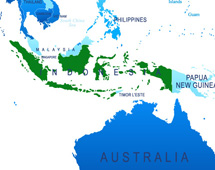
The umbrella cockatoo is native to the islands of Indonesia, where it lives in tropical rainforest.
Care & Feeding
The umbrella cockatoo is a long-term commitment for an owner — this species can live up to 70 years with proper care and attention. Unfortunately, many of these sensitive birds don’t live that long. They are prone to self-mutilation and the infections that result from that abnormal behavior.
Because this bird is large and hates being confined to the point of chewing and picking out its feathers, it requires a large space to live in, preferably an enormous, well-build cage with a top that opens into a playstand. An umbrella can’t live happily in a small space, and will become weary and apathetic or agitated and aggressive if confined.
The umbrella cockatoo owner should have experience with parrots before taking on this feathered handful. This is not a good first bird, nor is a good child’s pet. The umbrella also tends to become spoiled very easily, and will not take well to changes in routine, or additions to the family, such as an infant or new puppy.
Food for cockatoos should be nutritious, but should also include a foraging element as well. Cockatoos are fun-loving, intelligent and energetic parrots, and their food should reflect those traits. Wild cockatoos forage all day for seeds and nuts, as well as coconuts and grain crops. Like all companion parrots, cockatoos do not thrive on birdseed alone. Cockatoo food shouldn’t be boring to eat, either, and will love foods like Avi-Cakes, Pellet-Berries, Nutri-Berries, and Lafeber’s Premium Daily Diet Pellets.
Another serious consideration for a new owner is the powder dust that these cockatoos emit, which can irritate those owners with sensitive respiratory systems or allergies. Use air purifiers if you have room for them, as these items help to cut down on the dust. Regular bathing with clear, warm water will also help.
Personality & Behavior Of the white cockatoo
The umbrella cockatoo certainly makes a charming, affectionate pet, but it’s not for everyone. This bird can be as fickle as the weather, playing one minute and screaming and nipping the next. Birds will be birds, with all of their quirks and caprices, and umbrellas are no exception, though the informed umbrella owner is fortunate to live with this extraordinary bird that was named after something ordinary — and indispensable.
The umbrella desires nothing more than to cuddle with the object of its desire. And can become overly attached to other birds or objects in the pet shop. Leading to serious disappointment when these birds or objects are sold. These birds are extremely sentimental! In the wild, the umbrella is never without a companion. And the captive umbrella has the same instinctual patterning to bond to a mate, or at least to have a special friend. The best way to make an umbrella cockatoo unhappy is to keep it in isolation.
Speech & Sound
The noise level of this bird is extremely high. It is prone to bouts of loud screaming. Especially if it is isolated, locked in a cage, or doesn’t get its way. Screaming is often a measure of the bird’s displeasure — the louder the more significant the disapproval of its circumstances. Many cockatoos are re-home because of their superior voices. On the up side, the umbrella can be taught to talk and may acquire a vocabulary of more than 50 words. Though most will not learn that many. Often, a bird that learns to talk may substitute screaming for talking. But not all of the time.
Health & Common Conditions of the Umbrella cockatoo
Umbrella cockatoos are prone to picking at or pulling out their feathers is not offere sufficient mental stimulation. Other diseases/conditions found in cockatoos include psittacine beak and feather disease (PBFD). Fatty liver disease and obesity if fed a diet too high in fat.


Description
Best Spix’s Macaw Parrots For Sale
Species Overview
| Common Name: | Spix’s Macaw, little blue macaw, spix macaw |
| Scientific Name: | Cyanopsitta spixii |
| Adult Size: | 300 grams, 22 inches |
| Life Expectancy: | unknown in the wild; 20-30 years in captivity |
A member of the Psittacidae family, the Spix’s Macaw, spix macaw is a parrot also called a little blue macaw. With a relatively average size, it is not one of the large parrots – such as the hyacinth macaw with which it is sometimes confused.
It is easily recognized by its cyan-blue plumage, a relatively light shade that becomes lighter the closer you get to the animal’s head. The separation between its body and its head is clearly marked thanks to this lightening of the feathers.
Its eyes are rimmed with an even lighter blue, almost white. As for its beak, it resembles those of other parrots with a prominent upper part that covers the lower part. The Spix’s Macaw/ spix macaw used its powerful beak to crack the nuts on which it fed in nature.
origine and History of spix macaw
spix macaw for sale is an extinct wildlife species, although several captive birds are kept and protected and preserved in several nations of the world through extensive breeding programmes.
This Macaw was caught in the 1819s, along the dry north-east of Brazil by the German scientist Johann Baptist von Spix.
A gorgeous blue paracave, comparing to the Hyacinth macaw which has a length of about 100 cm is the Speix’s Macaw or Little Blue Macaw.
The Spix’s Macaw is 56 cm long and weighs between 295 to 400 grams, with a spread of 64 cm. So we estimate the life of the parrot to be 28 years in the wild and in captivity for 10 longer.
The blue plumage becomes darker on the wings and graduated tail. The underparts are paler, rather bluish-gray. The tail feathers are pale gray and the underside of the wing shows pale gray flight feathers.
The pale blue-gray head contrasts with the darker body.
The forehead, cheeks, and ear coverts are lightly washed blue. The hooked bill is blackish gray. Adults have pale straw-colored eyes, with a gray eyering and dark gray naked lores. The legs and feet are grayish brown.
Males and females are similar, with the female slightly smaller than the male.
Juvenile resembles adults, with slightly darker plumage and a whitish-gray to gray bare facial area. It has a shorter tail than that of adults. His eyes are dark at first, but gradually clear.
The Spix’s macaw, often known as the small blue macaw, is a medium-sized parrot native to Northeast Brazil. It has predominantly blue plumage. Males and females are essentially identical in appearance, but females are somewhat smaller on average.
Housing for Spix’s Macaws
spix macaw for sale are Large planted flights with associated shelters are required. Wooden structures are not advised because they are heavy chewers. Typically, metal constructions with a robust mesh are employed.
It Color
Most of it in blue colours, light-blue underpieces, shining blue tops with brunish-black legs and feet.
Years 20-30
That said, Spix’s Macaw can live in the wild for 20-30 years (longer in captivity) and the territory is quite big with areas that are hard to reach.

Cage : Because they enjoy chewing, new branches and tree trumps should be available on a regular basis. They require these for both enjoyment and to trim their muscular beaks.
Care
Because they enjoy bathing, keep water in small containers in their cages.
So do not expose them to temperatures below 20 degrees Celsius (68 degrees Fahrenheit).
The Behavior’s fascinating and vibrant behavior One of the most popular pets is the Spix Macaw. So we know them for being raucous, as well as lively and playful.
Diet
They eat primarily seeds and nuts, although they may also eat fruits and vegetables such as apples, bananas, plums, cucumbers, and carrots. Other choices include pigeon food and tree bark. So it requires supplements of vitamins and minerals for birds.
Lifespan
The captive population lives according to the study, approximately ten years longer than the wild. Years 20-30
That said, Spix’s Macaw can live in the wild for 20-30 years (longer in captivity) and the territory is quite big with areas that are hard to reach.
Health issues
spix macaw for sale Take a look at feathers, droopy eyelids and fluffy droppings, all indicators of disease. Only make a quick appointment to the veterinarian when you see any of these signs.
Lifespan of spix macaw
Based on the limited data that is available on this species, They can live between 20 to 40 years, the average being 28 – 29. we estimate that captive birds can live about 10 years longer than wild specimen.
The oldest recorded Spix’s Macaw hatched in 1976 and in 2010 – at the ripe age of 35 years – he produced two chicks. (Hatched at the Al Wabra Wildlife Preservation [AWWP] in Doha, Qatar).
Diet / Feeding
Natural Diet:
They feed on various seeds, nuts, fruits (mainly cactus fruits), flowers, leaves and other plant material found within its range.
They eat the seeds ofFavela / Faveleira trees (Cnidoscolus phyllacanthus) and Pinhão-brabo trees (Jatropha pohliana var. mollissima); and the fruits of Fachiero cacti (Cereus squamosus) and local licuri palm (Syagrus coronata).
They also take the fruits and seeds of the Joazeiro cacti (Ziziphus joazeiro) and the ” paudecolher” (Maytenus rigida); and the nuts of the Buriti palm (Mauritia flexuosa) (Meyer de Schauensee 1971, Sick 1985)
Other feeding plants include (or may include) the following.
Baraúna (Schinopsis brasiliensis), Imburana (Commiphora leptophloeos), Facheiro (Pilosocereus pihauiensis), Phoradendron sp., Caraibeira Tree (Tabebuia caraiba), Angico (Anadenanthera macrocarpa), Umbu (Spondias tuberosa), Unha-de-gato (Acacia paniculata), Geoffroea spinosa (Combretum leprosum), buriti palm (Mauritia flexiosa)


Description
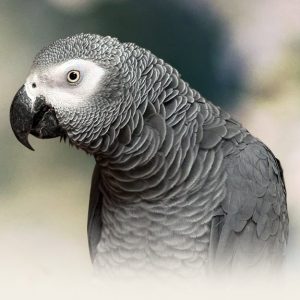 The Grey parrot, African grey parrot, Congo grey parrot, Congo African grey parrot for sale ability to talk and mimic sounds makes this medium-sized parrot a captivating companion. African grey owners often report that their greys oftentimes talk in context and seem very attuned to their people’s emotions. The African grey parrot is not just a top talker — this bird is also known for its extreme intelligence, which gives them the moniker “The Einsteins of the Bird World.”
The African grey parrot is one of the most talented talking/ mimicking birds on the planet, giving it quite a reputation among bird enthusiasts. Not only do bird keepers love this intelligent bird, it’s one of the most recognizable species to bird novices as well — everyone knows the African grey parrot. This parrot is one of the oldest psitticine species kept by humans, with records of the bird dating back to biblical times. Understated beauty and a brainy no-nonsense attitude are what keep this parrot at the peak of popularity.
At first glance, the African grey is a medium-sized, dusty-looking gray bird, almost pigeon-like — but further investigation reveals a bright red tail, intelligent orange eyes, and a stunning scalloped pattern to its plumage.
Native Region / Natural Habitat of the African grey parrot

African grey parrots are more prone to deficiency in vitamin-A/beta-carotene, and therefore benefit from eating vegetables high in beta-carotene, such as cooked sweet potato and fresh kale. Vitamin-D deficiency is another concern, especially for greys on a poor diet. Offering a balanced, pelleted diet, such as Nutri-Berries, for the main diet of an African grey helps prevent vitamin and mineral deficiencies. A grey that consumes a pelleted diet generally does not need vitamin supplements added to its food.
Temperament (African grey parrot for sale )
African greys are the most intelligent of the parrot species. Many grow to be extremely sweet and affectionate toward their owners, and we know the species for being quite sociable.
However, an African grey that is bored or neglected is an unhappy bird. A depressed or angry bird will screech its discontent. You must provide the bird with lots of mental stimulation.
A highly intelligent bird is also a complex bird. Although it is very social and demands interaction, it is not necessarily a cuddly bird. Some of these birds tend to become “one-person” birds. Even if owners make every effort to socialize them with all members of the family.
Personality & Behavior
Most bird keepers believe that only an experienced bird enthusiast should keep a grey. They are complex parrots, highly sensitive, and more than a little demanding. So they are also charming and brilliant, but this match of sensitivity and brains can lead to behavioral issues. They are creatures of habit, and even a small change in routine can make a sensitive grey unhappy. They are prone to plucking and chewing their feathers, among other bad habits. Anecdotally, the TAG has a hardier attitude and may be better for households with a lot of people coming and going. The CAG prefers a little less chaos.
African greys are social parrots that need a lot of hands-on time, however, they aren’t “cuddlebugs.” They will tolerate some head scratching and a little bit of petting. But they do not appreciate intense physical contact. Though some individuals don’t mind a little snuggling. Every bird has individual tastes and preferences. A grey can also become a “one person bird,” even if every member of the household socializes with it from the beginning.
Speech & Sound
Much of the grey’s appeal comes from its talking ability. It is among the best talkers in the parrot family. Able to repeat words and phrases after hearing them just once or twice. This bird reaches full talking ability around a year of age, and most individuals become capable mimics much earlier.
Not only will a grey develop an outstanding vocabulary, research has shown that this species can come to understand what it’s saying. The most famous CAG, Alex, and his colleague, Dr. Irene Pepperberg, may be the reason for the popularity of this species, and certainly for its high profile. Alex and Dr. Pepperberg worked together for 30 years at Brandeis University until his unfortunate death in 2007, due to a catastrophic event associated to arteriosclerosis (“hardening of the arteries”).
In their three decades of research, Dr. Pepperberg taught Alex to recognize and identify objects, colors, and shapes. Alex could also understand the concepts of same and different, category, and could even count objects. Though Alex was on his way to much more complex thought processes, including how to read, his fellow African greys Griffin and Arthur (AKA “Wart”) are continuing to work with Dr. Pepperberg trying to reach the point that Alex had reached and even further.
But just because greys are smart and may choose to talk rather than scream. It’s a mistake to believe that they aren’t noisy. They aren’t as loud or persistent as some of the South American species. But they will learn household sounds and use them tirelessly to the dismay of guardians. Imagine the microwave beeping incessantly, or a cellphone ringing madly without the luxury of turning it off.
Common Health Problems
African greys can be prone to feather picking, calcium deficiency, vitamin-A and vitamin-D deficiency, respiratory infection, psittacosis, and psittacine beak and feather disease.
Vitamin deficiencies can be prevented by making sure your bird eats a wide selection of fruits. As well as vegetables high in beta-carotene, such as cooked sweet potato, and fresh kale.
Feather-picking is usually the sign of a bored bird that is not receiving enough mental stimulation, attention, or exercise.
Exercise
Adequate amounts of activity are crucial to maintaining the health of an African grey parrot. So allow the African Grey Parrotsto spend at least 1 to 2 hours out of their cages daily. With vigorous exercise and make sure to provide them with plenty of bird-safe chew toys. To help exercise their powerful beaks.
- Social, friendly, although do not like cuddles
- Intelligent, can speak and understand hundreds of words and phrases
- Requires a lot of attention and mental stimulation
- Tend to be one-person birds not the greatest family pet
African grey parrots generally inhabit savannas, coastal mangroves, woodland and edges of forest clearings in their West and Central Africa range. Though the larger of the African grey subspecies is referred to as the Congo African grey, this bird actually has a much wider natural range in Africa, including the southeastern Ivory Coast, Kenya, and Tanzania. The Timneh African grey is found in a smaller region along the western edge of the Ivory Coast and through southern Guinea. Their diet in the wild consists mostly of palm nuts, seeds, fruits, and leafy matter.


Description
Best Military Macaw For Sale
The Military Macaw (Ara militaris) received their name when they were first imported into Europe by military personnel; also some suggest that this species was named for the overall “army or olive green” color of its plumage.
At first glance, these parrots may not be as striking as some of their cousins, but these parrots are beautiful nonetheless. They are fun-loving and sociable, and many of those kept as pets have distinguished themselves as excellent talkers.
Besides being chatty and social, military macaws are large parrots that have a reputation for being pleasant, even-tempered pet birds. Ideally, if it is hand-fed from birth, it can form a strong bond with its owners. These curious birds look forward to interacting with its human “flock.”
Species Overview
COMMON NAMES: Military macaw, Bolivian military macaw, Mexican military macaw
SCIENTIFIC NAME: Ara militaris
ADULT SIZE: 30 inches from the beak to the tip of the tail feathers, wingspans of over 40 inches, and weighs about 2 pounds
LIFE EXPECTANCY: Averages 50 years
Origin and History
Military macaws are native to Central America and South America. Their range generally extends from Mexico to Argentina. Unlike other parrots, military macaws tend to prefer arid lands over tropical rainforests. You can also find them in dry forests and in trees near the water. However, some of the South American flocks live in humid, lowland forests as well as canyons and foothills.
There are two subspecies of this macaw: the Mexican military macaw and the Bolivian military macaw. The Mexican military macaw (Ara militaris mexicana) is the largest; it primarily inhabits Mexico. The Bolivian military macaw (Ara militaris boliviana) has a range that extends from Bolivia to northern Argentina.
This bird is a protected species; it is considered vulnerable for extinction. Though the overall population exceeds 10,000, habitat loss and trapping for the pet trade have made some regional populations endangered.
Historically, the military macaw has been on record since the 1500s when Europeans first came to the new world. Its name derives from the military personnel who brought them back to Europe. It also alludes to their olive green coloring that resembles “military green.”
This macaw is a popular species used for breeding hybrid macaws in captivity, such as calico macaws, milicinth macaws, and miligold macaws.
Temperament
The military macaw is an easily tamed, good-natured bird. In the wild, they are rarely alone, living in pairs or flocks of 10 to 20 birds. In captivity, It is not unusual for this bird to prefer one person or even one gender. It is essential to introduce it to a variety of people, so it remains friendly in all social situations.
While they aren’t known for being especially affectionate, military macaws that have been appropriately handled and socialized might enjoy some cuddling and petting.
These birds can get cranky at times. Macaws can get nippy if they’re not happy or well trained. Many owners find that their bird’s mood often reflects their own.
They can act like a “watch bird,” letting you know when something’s not right around the house. For instance, they might call out to let you know when a stranger is at the door. Military macaws like routines. It can usually anticipate when you are expected home and when it’s dinner time.
A gregarious and intelligent parrot, military macaws are a popular choice for bird shows. Training them is relatively easy with treats, and they love to learn tricks. Some even become potty trained to only go in their cage.
Speech and Vocalizations
Though this bird is not naturally as good a talker as other parrots, you can train it to be talkative and it can learn a handful of words and phrases.
Like all macaws, these birds will rise with the sun each morning, and they scream to let you know they are up. This alarming call happens again in the evening when readying for bedtime. While they’re generally considered one of the quieter macaws, they can screech and have a distinct croak. This noise level is usually not suitable for apartment or condominium living.
Military Macaw Colors and Markings
Military macaws are mainly green with more bright lime green on the head that progresses into darker and olive greens on the body. They have brilliant blue edging on their wings and a bright red tuft on their foreheads. Their tail feathers include browns and reds with a yellow-olive tint underneath.
These birds have bold black beaks and dark gray legs and feet. Their eyes are framed by the classic bare macaw facial patches, each with concentric rings of small black feathers.
This is a monomorphic species, meaning males and females look alike. DNA or surgical sexing are the only ways to determine whether the bird is male or female.
Caring for a Military Macaw
In captivity, a parrot’s owner becomes the bird’s flockmate. This bird is not a pet that you can buy and ignore; these birds need interaction and mental stimulation.1 If you don’t oblige them, you will pay the price in wrecked property, bitten fingers, and frustration.
The cage itself needs to be large—at least 2.5-feet by 3-feet wide and 5-feet tall. If you can, create a dedicated bird-safe room. Be sure to include a large perch inside the cage and have a play stand for time outside its home. The military macaw may become territorial with its cage; limit putting your hands in the cage while the bird is inside it.
You will need to clean the bird’s cage on a regular schedule. Clean the perches and toys once a week, wash the floor of the cage once a month, and thoroughly sanitize the rest of the cage once a year.
Consider the costs of owning one of these parrots before rushing out to get one. Veterinary bills, quality feed, toys, and cages add up. If you can’t give your bird the best of everything, consider holding off on adopting one until you can.
Common Health Problems
Macaws may be long-lived birds, but, like all parrots, they are prone to a viral infection called macaw wasting syndrome and overgrown beaks.2 Like other pet parrots, military macaws may resort to self-mutilation by feather plucking if they feel neglected or bored.
Diet and Nutrition
In the wild, military macaws feast on seeds, berries, nuts, fruits, and vegetables. Pet military macaws should eat a similar diet made up of a high-quality seed or pellet mix and fresh bird-safe fruits and vegetables.
Macaw owners often find that their bird likes to join them for dinner. You can feed them nutritious “people food” on occasion, including small amounts of protein like chicken. If it’s healthy, natural, and generally considered “good for you,” it should be good for your bird as well. The exceptions are avocado, chocolate, and rhubarb, which are toxic to birds.
Depending on its size, a macaw will eat about 1/2 to 3/4 cup of parrot mix and about 1/2 to 3/4 cup of fruit and vegetables every day. You can feed it once in the morning upon waking and at dusk before it goes to sleep. Remove all uneaten food before bedtime.
Exercise
In the wild, military macaws fly several hundred miles a day. In captivity, regular exercise is essential. Owners should allow a minimum of 2 to 4 hours of playtime outside of their cages every day. This activity time gives the birds a way of stretching their wings, exercising their beaks, and will provide mental stimulation as a bonus.
Military birds are active, so occupy their time with tasks and activities. Bird-safe toys are a must. One of their favorite activities is chewing, so wood will be your go-to, even if it’s just tree branches. This bird will also appreciate swings, ropes, link chains, and bells.
Toys are also excellent distractions for this curious parrot that may otherwise spend its time screeching, feather-plucking, or chewing things around your home.
- Intelligent, can learn to speak and perform tricks
- One of the quieter macaws
- Even-tempered, friendly, and social
- Can be noisy, not well-suited for apartments
- Requires at least 2 to 4 hours of supervised out-of-cage time
- Large bird that requires a sizeable cage


Description
Best Green Wing Macaw For Sale
Species Overview
COMMON NAMES: Green-wing macaw, red and green macaw
SCIENTIFIC NAME: Ara chloroptera
ADULT SIZE: 40 inches long with a 49-inch wingspan, weighing 3 3/4 pounds
LIFE EXPECTANCY: 50 years; however, there have been reports of green-wing macaws living well into their 80s
The greenwing macaw is among the largest macaw species. Its large beak can be intimidating, but this macaw has a reputation as a gentle giant.
At about 35 inches from its crimson head to the tip of its tapered tail. And weighing in at between 2 1/2 to 3 1/2 pounds. So the green wing macaw is one of the largest birds in its genus. And so almost as large as the Buffon’s macaw or the hyacinth macaw. Of the larger macaws, the green wing is possibly third most popular large macaw companions, after the blue-and-gold macaw and the scarlet macaw.
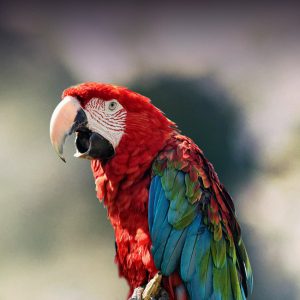
So the green wing Macaw has, not surprisingly, a band of forest-green at the center of its wings; below the green is a bright turquoise and above is a cherry-red that extends up and over the whole of the bird’s body and head; the flights are dark blue and the tail is very long and is comprised of blue and red feathers. The beak has a black lower mandible and a horn-colored upper mandible and is formidable in size, able to crack difficult nuts with ease.
Native Region / Natural Habitat Of The Green Wing Macaw
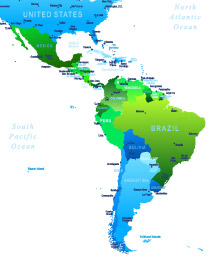
So this big beauty hails from regions in Panama, Colombia, Venezuela, Ecuador, Guyana, Brazil, Peru, Suriname, French Guiana, Paraguay, Argentina. And Bolivia, and covers roughly the same area as the blue-and-gold macaw. Its wild diet in the tropical lowlands is much the same as that of the blue & gold’s, including fruit, seeds, berries, and nuts. The green-winged macaw also feeds at the famous “clay cliffs” known for their high mineral content said to neutralize toxins.
Care & Feeding
The green wing’s size alone is a deterrent for many bird owners, who don’t have the room for such a large animal. The green-winged macaw needs a very large cage. Stainless-steel cages are now becoming popular and more affordable, and are a good material for green-wing housing; this bird can easily bend or break the bars of a cheaply made cage. Powder-coated cages are fine, too, if they’re well-made, and the bird will greatly appreciate a cage with a play top.
Green wings get along with most other macaws their size, so keeping two macaws together is fine, but don’t allow birds of different species to breed.
Macaws, including green-winged macaws, thrive on a nutritionally balanced diet, such as Lafeber’s Nutri-Berries and Lafeber’s Premium Daily Diet Pellets, as well as fresh fruits, vegetables, and healthy table foods. If properly fed and cared for, a green-winged macaw is reported to have a life span of more than 70 years.
Personality & Behavior
That great big beak can look intimidating, but the green-winged macaw is actually the gentler of the large macaws, not known for biting and massive mood swings. A well-raised green wing, one that’s healthy and well-treated, is a pleasant companion and long-time friend, with a life span of more than 70 years.
Speech & Sound
The green wing can talk, but is not known to be a chatterbox; instead, an owner can expect intermittent screaming, which is quite loud, but not persistent, that is, if the bird is being cared for properly. An unhappy green wing can cause a ruckus that will get someone tossed out of an apartment building.
Health & Common Conditions
Like other parrots, green-winged macaws are prone to self-mutilation/feather plucking, nutritional disorders, and a variety of diseases, including Proventricular Dilatation Disease (Macaw Wasting Syndrome), as well as overgrown beaks. A nutritionally balanced diet and regular veterinary health exams can help keep your green-winged macaw healthy and thriving.
Temperament
Green-wing macaws are tame and affectionate with a usually even, easy-going disposition. They are friendly and require a couple of hours of interaction with you every day. These birds are brilliant; they can learn to speak words and do tricks.
As one of the largest species of parrot, they have incredibly powerful beaks. Although they are among the most gentle parrots, a green-wing macaw with behavior problems can be a biting hazard for families with little children (and little fingers). Most species of parrots will develop behavioral issues if they do not get sufficient attention from you or their human flock.
Speech and Vocalizations of Green Wing Macaw
The green-wing macaw can be taught to speak about 15 words but is not known for its talking ability. This bird will screech and scream, for example, when it gets excited, feels threatened, or wants attention. This bird can get loud. This species is an unsuitable companion for those who live in an apartment or other close quarters.
Green-Wing Macaw Colors and Markings
The green-wing macaw is one of the most recognizable of all the parrot species. These bright birds are a deep vibrant red on the head, shoulders, and breast with a greenish band below the shoulders and wings. The green band transitions to dark blue on the wings, and there is light blue on the rump and on the tail feathers.
The long tail feathers are red, tipped in blue. The legs and feet are a deep gray, and the beak is with a black lower mandible. The bird has eye patches on the face. Males and females are indistinguishable, except that males are slightly larger. To figure out the sex of the bird, it will need DNA testing or surgical sexing.
Common Health Problems
Green wing macaws, like other macaw species, are susceptible to some diseases, including:
- Proventricular dilation disease (also called macaw wasting disease): This viral disease causes intestinal problems as well as neurological symptoms. It is usually fatal, and the best preventive measures are to keep the birds isolated from other birds that might carry the virus.
- Psittacine beak-and-feather disease: A disease caused by a circovirus, it kills the cells of the feather and beak and also compromises the immune system. It is usually fatal and is best to prevent by making sure your bird is properly in quarantine before you buy it.
- Psittacosis: This bacterial disease causes respiratory symptoms and eye discharge. Stressed birds are most susceptible, and prompt treatment with antibiotics can often cure the disease.
So other problems that are less serious include allergies and behavior problems. Such as feather plucking, which usually occurs in parrots that are bored or frustrated.
Exercise
Although they are not as active as other large parrots, green-wing macaws still need plenty of exercise for both mental and physical stimulation. You will need to provide 2 to 3 hours of supervised out-of-cage playtime daily. Provide a separate playpen structure away from the cage for exercise periods.
Make sure that you keep a close on your birds while they are out of the cage. Green wing macaw is known for being voracious chewers and can chew through a door frame or expensive molding with lightning speed. So you should invest in some good-quality chew toys and be ready to keep resupplying them, as these are disposable items where macaws are concerned.
- Friendly, affectionate, tame disposition
- Intelligent, can learn to speak up to 15 words and trained to perform tricks
- Long-lived species
- Can be loud, so not well-suited for apartments
- One of the largest parrots, requires a large cage
- Strong, powerful beak is a biting hazard around young children


Description
Best Hahns Macaw For Sale
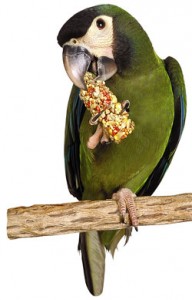 The Hahns macaw is one of the more popular mini-macaw species. Mini macaws have the same physical attributes as their larger macaw cousins, but in scaled-down proportions. They are a favorite of macaw fanciers due to their compact size, intelligence and superb pet quality. Though Hahn’s macaws are not as flashy as larger macaws, they, along with their close cousin, the noble macaw (Ara nobilis cumanensis), is highly prized for their “large macaw” personality in a mini-macaw body.
Native Region / Natural Habitat
Hahns macaws are native to Venezuela, the Guianas, Bolivia, Brazil and Peru, where it inhabits tropical lowlands, savanna and swamplands.
Care & Feeding
As with any other bird, the Hahns macaw needs a well-balanced, nutritious diet to survive, the lack of which will greatly reduce its life span. Macaws need a nutritious, interesting diet. Check out Lafeber’s Nutri-Berries, Avi-Cakes, and Premium Daily Diet.
These birds need space and exercise, and will become overweight if confined for too many hours a day. Remember, too, that macaws are extremely intelligent birds and need a lot of stimulation to maintain a healthy attitude. A depressed or unhappy macaw can develop neurosis and self-mutilating disorders. These birds are reported to live for more than 40 to 50 years if cared-for properly.
Personality & Behavior
Like larger macaws, the Hahn’s mini macaw is very intelligent and quick to learn vocalizations and tricks, including opening the cage door. When hand-raised, a Hahns macaw can make a wonderful pet. Owners will be charmed by their antics. Hahn’s are active birds, always on the lookout for something fun to chew or climb on, so watch out for your furniture and drapes.
Hahns mini macaws are far more appropriate for children than a larger macaw is. They are easier to handle because of their smaller size, and their sweet temperament makes them less prone to nipping. However, take caution where birds and children are concerned — there is always the potential for injury on both sides.
Speech & Sound
Hahn’s macaws are between 12 and 14 inches long, making them more suitable for apartment living than a large macaw — but only if your neighbors are deaf. These are noisy birds, especially if you have more than one. Their voices are grating — Hahn’s are not the most pleasant-sounding birds in the parrot family.
Hahn’s macaws can be wonderful talkers, however, and will learn many words and phrases. Hahn’s macaws are good whistlers, too, but may take to whistling over talking, so teach them to talk before you give whistling lessons.
Health & Common Conditions
Like other macaws, Hahn’s macaws are prone to self-mutilation/feather plucking, and nutritional disorders, and a variety of diseases, including Macaw Wasting Syndrome, as well as overgrown beaks. A nutritionally balanced diet and regular veterinary health exams can help keep your scarlet macaw healthy and thriving.
Get a Hahn’s Macaw
The Hahn’s macaw is easier to find than some of the other macaw species. It is a favorite of bird breeders because the space it takes to breed these birds is far less than with the much larger macaws. You likely won’t find a Hahn’s mini macaw in large pet stores, but from avian-specialty stores and from bird breeders.
The smallest of the miniature macaws, the Hahn’s macaw is primarily green with a fleshy white face-patch. Hahn’s macaws are smaller than some of the larger conure species, and can easily be mistaken for a conure by a novice.
Common Health Problems
Like other macaws, Hahn’s macaws are prone to self-mutilation/feather plucking, overgrown beaks, nutritional disorders, proventricular dilatation disease (a digestive disorder, also called macaw wasting syndrome), and psittacosis (a common avian bacterial infection).
Exercise
Like all parrots, wild Hahn’s macaws fly for long distances every day. In captivity, a Hahn’s macaw also needs an adequate amount of time out of the cage to play, exercise, and stretch its muscles. Provide your parrot with at least two hours of supervised out-of-cage playtime a day.
Social and intelligent, Hahn’s macaws respond quickly to training which gives birds mental stimulation and keeps them from getting bored. You will have a lot of fun teaching these little birds tricks. Introduce new tasks throughout their lives to keep them mentally engaged.
With these parrots, it’s best to ignore unwanted behavior—including excessive noise. Scolding has the opposite effect; it shows the bird that loud, stern squawking is an acceptable form of communication. Your best approach is positive reinforcement. Reward good behavior and quiet moments, and your little bird will start to understand what is acceptable behavior. They aim to please their keepers and handlers.
- Social, friendly, can get along with children
- Intelligent, can learn to talk and do tricks
- Smaller size, does not need a typical macaw cage
- Can be noisy, not well-suited for apartments
- Requires at least 2 hours of supervised out-of-cage time
- Can be nippy as a young bird
Temperament
Intelligent and charming, Hahns macaws are popular pets. Be aware, however, that while they may be small, they pack all the personality of a larger parrot into their compact body. Expect many fun-filled hours watching their spirited antics.
Their compact size makes them suitable for bird lovers who live in smaller spaces or anyone with children. However, these birds are not suited for apartment living; they can be quite noisy when they feel like it.
Overall, the Hahn’s macaw tends to be a very gentle bird. If you adopt a young bird, it may nip a bit, but they usually grow out of that habit. They will also calm down as they mature. When socialized, they can be sweet little birds that get along well with children as long as both parties interact appropriately with one another.


Description
Best Scarlet Macaw For Sale
Widely regarded by bird lovers as the most beautiful parrot, scarlet macaw is among the most colorful. Scarlet macaw for sale australia. They have large solid swatches of red, blue, and yellow feathers. This flashy, gutsy bird is full of energy and has a big personality. This large parrot easily makes the list of most popular parrots every year.
Species Overview
COMMON NAME: Scarlet macaw
SCIENTIFIC NAME(S): Ara macao with two subspecies: Ara macao cyanoptera (Central America) and Ara macao macao (South America)
ADULT SIZE: 35 inches long, weighing 2 to 3 pounds
LIFE EXPECTANCY: 80 years or more, though 40 to 50 years is more typical
Origin and History
Scarlet macaws are native to the tropical rainforest areas of Central and South America. Its preferred habitat is humid evergreen forests at elevations from about 1,000 to 3,000 feet. In the wild, it dwells mostly in the canopy and topmost layers of the trees.
This species has an extensive natural range, but it is threatened in many areas due to deforestation and illegal trapping for the pet trade. The scarlet macaw is on the CITES
Temperament
The scarlet’s striking plumage may be what initially draws your attention, but its personality keeps you enthralled. Scarlet macaws are intelligent birds with an abundance of energy and character.
Scarlet macaws that have been hand-raised or hand-trained can be very affectionate. They make great companions with a sweet disposition.
In the wild, scarlet macaws live in small flocks. If you keep this bird as a lone pet, you become its flockmate and can form a strong bond. To keep this bird as a tame housemate, you will need to be attentive and interact with it every day. If not properly trained and socialized, it can become aggressive and destructive.
Scarlet macaws are idiosyncratic birds that may become fixated on one person. To avoid this behavior, train them from an early age to socialize with every family member.
This bird’s impressively large beak is powerful. If provoked, it can bite. This bird may not be a great fit for families with children who are too young to understand bird warning signs or boundaries.
Scarlets, like all macaws, are noisy at times. They can learn how to talk, although its blue and gold macaw cousin is known to be the more prolific talker.
Speech and Vocalizations
Confident and friendly, scarlets are usually eager to learn tricks and develop a vocabulary of 5 to 10 words. Scarlets can get extremely loud which may make them a questionable choice for those living in apartments or condominiums. If you are sensitive to loud noises, you might want to think about getting another bird species.
Scarlet Macaw Colors and Markings
Scarlets are mostly vivid red with bright yellow and blue edging on their wings. Some birds may have a band of green where the yellow meets the blue. The large eye patch is white, and the bill has a horn-colored upper mandible and a black lower mandible. There is no obvious way to tell apart the males from females; to figure this out, the bird needs genetic or surgical sexing.
Caring for the Scarlet Macaw
Macaws are the largest of the parrots. A scarlet macaw is best suited for a large space and will not thrive in a cage that is too small. Get a cage that is at least 2 1/2 feet by 3 feet. It needs a lot of out-of-cage time, and if it doesn’t get it, the bird may develop behavioral problems. It will resort to feather-plucking and other forms of self-mutilation. They can get bored quite easily, so provide them with large swings and toys.
Once a week, offer your macaw a bath or hose down your bird with lukewarm water using the fine-mist setting of your handheld shower sprayer.
To prevent your bird from flying through an open window or door, trim its primary wing feathers.
Common Health Problems
Scarlet macaws, like other large parrots, are prone to self-mutilation and feather plucking when they are bored or neglected.
These birds are susceptible to a variety of nutritional disorders and diseases, such as macaw wasting syndrome (proventricular dilation disease), parrot fever (psittacosis), and psittacine beak and feather disease (viral infection).
Overgrown beaks are also sometimes a problem; this can be prevented if you provide hard chewable toys and rough surfaces for the macaws to trim their beaks.
Diet and Nutrition
Nuts, leaves, berries, and seeds from the rainforest make up the bulk of the scarlet macaw’s diet. Its strong, hooked beak is perfect for breaking nuts and seeds.
The best diet for a macaw in captivity begins with a formulated parrot mix that includes a variety of seeds, dried fruits, and nuts. Provide a variety of fresh fruits and vegetables daily, as well as high-calcium greens like kale and spinach. An all-seed diet is extremely unhealthy for these birds. Never offer chocolate and avocado, which are toxic.
The average healthy macaw will consume approximately 10 to 15 percent of its body weight daily. An average bird weighs about 2 pounds. You can expect a bird will eat about 1/2 cup of food per day, which equates to about 100 pounds of food per year. Feed them in the morning upon waking. Remove any uneaten chop or freshly cut fruits and vegetables after an hour.
xercise
Macaws are large birds and need ample space and time to play and stretch their muscles. These are active birds by nature. These birds need the means to burn off energy. A scarlet macaw should be allowed outside of the cage for at least two hours a day; five hours is optimal.
Rotate a varied supply of chew toys to help it exercise its powerful beak and jaws. Rugged toys that can take a beating help the jaw muscles while providing an outlet for the chewing instinct. (scarlet macaw for sale australia)
A play gym or a parrot cargo net that allows your macaw to play and climb can be a great activity to help your bird meet its exercise requirements.
- Beautiful and intelligent
- Can talk and mimic human sounds
- Long-lived
- Tendency for loud squawks and screams
- Requires at 2 to 5 hours of daily exercise, mental stimulation
FAQs
1. What does a scarlet macaw look like?
The name scarlet macaw seems pretty descriptive, but what does it actually look like? Well, according to the Rainforest Alliance, a scarlet macaw is fantastically brilliant!
A white, barely feathered area encircles bright eyes, leading into the ravishing red feathers covering most of this gorgeous bird’s body.
The wingtips and tail feathers are a deep blue and sunny yellow, giving this bird a reason to preen that has nothing to do with pea-cocking.
2. How big is a scarlet macaw?
Macaws are among the largest in the parrot grouping. Scarlet macaws are one of the largest in length/height for its species. Measuring in at nearly 3 feet, 81 centimetres or 32 inches, almost half of that length
is made up by the scarlet macaw’s tapered tail.
3. What is the scarlet macaw’s wingspan?
The Scarlet Macaw’s wingspan is right at about 1 meter or roughly 3 feet. (scarlet macaw for sale australia)

4. How much does a scarlet macaw weigh?
An average adult scarlet macaw will weigh up to about 1 kilogram, or 2.2 pounds.
5. Why is a scarlet macaw so colorful?

It is indigenous to the South American rainforest, with vivid flowers and brightly colored fruits and berries. The scarlet macaw, if left in their natural habitat, would be perfectly camouflaged against most predators.There’s no doubt that the scarlet macaw is colorful. While the scarlet macaw’s plumage might make it stand out in a Kansas field, in its home territory it blends perfectly in.
6. Do scarlet macaws talk? (scarlet macaw for sale australia)
Like all macaws, the scarlet macaw will mimic human speech. They are highly social animals and can be taught words or phrases easily.
They mimic their environment and the humans they are closest to, and just like children, will “parrot” most phrases you wouldn’t necessarily want them to. So be careful what you say around your scarlet macaw, or your face could be just as red as their plumage.(scarlet macaw for sale australia)
7. Are scarlet macaws friendly? Or aggressive?
Scarlet macaws bred in captivity are quite affectionate. Hand-feeding helps to earn your macaw’s affection and trust, but keep in mind, these are loud, raucous, and social birds. They have the ability to become aggressive – especially if they aren’t given enough stimulus.
In the wild, scarlet macaws are neither friendly or aggressive but simply keep to themselves. You have little to fear from a scarlet macaw.
8. Do scarlet macaws make good pets?
They’re intelligent, but not made to be alone. If you have a job or responsibilities that keep you out of your home, your scarlet macaw will need a friend to keep it company.
If they become lonely, they’ll develop nervous habits like biting or tearing out their own feathers.
Because of their loud nature and large stature, we also do not recommend for apartment living. These birds need room and lots of it! To be a good macaw pet parent, it’s essential to research the bird before deciding to adopt one. (scarlet macaw for sale australia)


Description
Best Hyacinth Macaw For Sale
The hyacinth macaw or blue macaw is possibly the most stunning of the macaw family, and is certainly the largest. It is the largest of all parrots. Originally from Brazil, Paraguay and Bolivia, the hyacinth is the “Great Dane” of companion birds, with the mature male reaching over 40 inches in length. Very few people actually have a hyacinth macaw as a companion, and will probably only have the pleasure of seeing one in a zoo or a larger bird shop. Despite its size, penchant for destruction, loudness and expense, this blue macaw is the penultimate companion bird for the person who has the time, patience and wallet to properly keep this beautiful beast.
The hyacinth macaw is a stunning cobalt color all over its body, with a ring of bright yellow around its eye and the same color yellow at the base and the corners of its beak. We often referre to ot simply as a “blue macaw.” The hyacinth is not twice as large as other large macaws, though its big personality makes other macaws seem like dwarves in its presence.
Native Region / Natural Habitat

The hyacinth macaw lives primarily in the scrublands at the outskirts of the rainforest, though its large range also includes grasslands and lightly forested regions. It is an endangered species — there are an estimated 2,500 to 5,000 Hyacinth macaws left in the wild today. Destruction of their environment, hunting for feathers and food, and illegal poaching for the pet trade have contributed to the Hyacinth’s declining numbers. Eggs and nestlings have some natural predators as well.
The hyacinth macaw is part of many conservation programs: the Species Survival Plan, which helps to ensure the survival of select species, and the World Wildlife Fund-Brazil, which has had their Hyacinth Macaw Project going for 10 years, monitoring hyacinth macaws, setting up artificial nests, and working with local land owners to protect the species, are among them.
Another reason why these birds are so rare, both in the wild and in the pet trade, is because they develop much more slowly than companion birds. Babies fledge (leave the nest) at about 13 weeks, but they don’t become fully functioning adults for another six months. Breeding age begins at about 7 years of age. These birds can live to be more than 60 years old if cared for properly.
Care & Feeding
The right owner for a hyacinth macaw is someone who has either kept many birds successfully before, or someone who has done a lot of research, has consulted the experts, and knows exactly what they’re getting into. Still, the Hyacinth is not a great first bird simply because it can be a handful.
Hyacinth macaws need a very specific diet. In the wild this bird’s diet consists almost wholly of palm nuts from two specific types of palm tress. Hyacinths harvest the nuts from the trees in the wild. Though the bird also has a very characteristic way of finding the nuts already stripped of their tough, fibrous outer coating: Hyacinths forage in cattle lands looking for dung containing the nuts, which are indigestible to the cattle, but easier for the hyacinth to open. The cow has done most of the work.
Hyacinth Macaw For Sale
The hyacinth macaw’s diet is very high in fat. And though you may not be able to find palm nuts (especially those predigested by cattle!), you can substitute Brazil nuts, walnuts, almonds, macadamias, coconut, pistachios and cashews. Lafeber macaw foods address these dietary needs. Avi-cakes, Nutri-Berries, Parrot Pellets and more contribute to a healthy diet that also encourage foraging for pet Hyacinths.
You will probably never see an obese hyacinth macaw. So they seem to metabolize fat very easily and, in fact, need to be encouraged to eat anything else, such as fruits and vegetables, which should be fed daily. Of course, a good seed and pellets based diet can be offered as well.
This large bird needs an exceptionally large housing area. Be willing to devote a large part of their home to this bird. A “regular” cage isn’t appropriate in this case. Not only are most commercial cages too small, the hyacinth macaw can easily break out of them. A custom cage or one of the very largest commercial cages would do. Though a full room, patio or other safely enclosed, bird-proofed area is better. All birds benefit from flying, and this bird will need a lot of room if it’s going to enjoy this important exercise. Even a hyacinth macaw with trimmed wing feathers needs plenty of room to flap and clamber around.
Hyacinths can be very destructive and need lots of wooden toys and branches to chew. A sturdy play gym is a must, though even the sturdiest commercially built play gyms will have a hard time withstanding the hyacinth’s strong beak. Large, safe, replaceable play trees are a good bet, too.
This bird, like all parrots, needs a lot of free time daily to play with its humans or just hang out. It is a social bird, usually seen in pairs or in small groups in the wild. They are not “loners,” and will languish without company. Also, confined hyacinth will become cranky and neurotic, and can begin to self-mutilate and scream excessively. They will get along with other birds, particularly New World parrots, but we should introduce individuals early.
Personality & Behavior
Often called a “gentle giant” the hyacinth macaw is indeed affectionate, but gentle it is not. Hyacinths subdue very easily.But they tend to want to play rough with other hyacinth macaws. And so with their “person.” Its beak carries over 200 pounds of pressure per square inch. That means that it could snap a broomstick in half with one crunch. Even a very tame hyacinth macaw can still be nippy. (if you could call that big beak nippy), but that is usually playful behavior. Because its beak is so intimidating, this bird is best kept by a person who is not daunted by the thought of being bitten. There’s no guarantee, even with the tamest bird, that the occasional bite will not happen.
Speech & Sound
If you have close neighbors, you may want to reconsider getting a hyacinth macaw. This bird is extremely loud and prone to screeching. One hyacinth might not be so annoying to neighbors, but a pair will pump up the volume. Also, a loud hyacinth macaw can call the attention of bird-nappers looking to sell such an expensive bird. So make sure to keep your birds safe from potential theft.
Hyacinth macaws are not the best talkers among the macaws. So they will learn a few favorite words and phrases and repeat them over and over. These birds are highly intelligent, and may learn to contextualize certain words as well.
Health & Common Conditions
Hyacinth macaws or Blue Macaw is especially prone to overgrown beaks and need a steady supply of safe items to chew. As with other macaw species, hyacinth macaws are susceptible to proventricular dilatation disease (“Macaw Wasting Disease”), psittacosis and papillomas. A diet catering to a hyacinth macaw’s special needs as well as regular health exams is key to maintaining good health.
Get a Hyacinth Macaw (Blue Macaw)
Hyacinth macaws are not often found in full service pet shops because they are quite expensive. So retail buyers should expect to pay upwards of $7,000 for a young hyacinth. So perhaps more for a mature, ready-to-breed adult. Pairs bring top dollar, especially if they are “proven,” having bred successfully before. Because these birds are so rare, many of them are in breeding programs, rather than being bred by novices. Many breeders hope eventually to reintroduce this species into the wild, where their numbers are rapidly declining. It is almost not fair to the species to see them in “pet-only” homes. So when there is a real danger that this beautiful giant may disappear forever.


Description
Buy Blue And Gold Macaw Parrot or blue-and-yellow macaw
Scientific Classification
- Common Name————–blue and and gold macaw, blue-and-yellow macaw
- Kingdom———————Animalia
- Phylum———————–Chordata
- Class————————–Aves
- Order————————-Psittaciformes
- Family————————Psittacidae (true parrots)
- Genus Species—————Ara (macaw) ararauna
Fast Facts
- The Blue And Gold Macaw (blue-and-yellow macaw)parrot with long tail feathers and mainly blue and yellow in color. The forehead is green; the upper part of the body a brilliant blue; the sides of the neck and body is golden yellow. These macaws also have black around chin and cheeks, and the naked skin of cheeks is pinkish-white with lines of very small, isolated black feathers. The blue and gold macaw has a strongly hooked beak and zygodactylous feet (2 toes that point forward and 2 toes that point backward).
- Size————————-Approximately 85 to 90 cm (34 to 36 in.); wingspan 102 to 112.5 cm (41 to 45 in.)
- Weight————————-Approximately 900 to 1200 g (2 to 2.7 lbs.)
- Diet————————-Feeds on seeds, fruits, nuts, and berries
- Incubation————————-Approximately 29 days
- Clutch Size————————-2 to 3 eggs
- Fledging Duration————————-After 4 months; young then remain with parents for up to a year
- Sexual Maturity————————-Approximately 2 to 4 years
- Life Span————————-Up to 80 years
- Range————————-Eastern Panama through Columbia, Ecuador, and Brazil
- Habitat————————-Found in forests and swamps
Fun Facts
Macaws are often monogamous, remaining bonded for life. They are often seen flying in large flocks and the bonded pairs fly close together, their wings nearly touching.
In the wild, macaws often flock to mountains of clay known as “macaw licks.”
When disturbed, these bright birds screech loudly and circle overhead with their long tails streaming.
Macaws are playful and inquisitive and are able to mimic human vocalizations very well.
So macaws are extremely messy eaters – their incredibly strong beaks are perfectly adapted for eating all sorts of nuts and seeds, as seen in their ability to crack open incredibly hard-shelled nuts with ease.
Macaws are able to reach speeds of up to 56 kph (35 mph).
Ecology of the Blue And Gold Macaw
In the course of daily feeding, macaws allow plenty of seeds (while eating, as well as in their droppings) to fall to the forest floor, thus generating much of the forest growth.
Temperament
Their sociability and even, sweet disposition makes blue and gold macaws a great pet. Their intelligence, willingness to learn, and talking ability are a plus.
When allowed to socialize with a variety of people, blue and golds do very well adapting to different people and other birds. The blue and gold is a fantastic bird for tricks. They’re a popular headliner at bird shows, and many owners may even take them out around town with the help of bird leashes and car seats.
Around the house, these macaws may act like friendly dogs. They enjoy being near their owners and seek out attention. They are also content on their perch, watching the activity around them.
Speech and Vocalizations (blue-and-yellow macaw)
Blue and gold macaws are capable of ear-shattering calls, which are usually not appreciated by close neighbors. They are not the best choice for those who live in apartments and condominiums or if you have small children who are startled by noise.
This bird is a great talker; it can learn quickly and aims to please. Training is relatively simple as long as you are consistent. They can learn a vocabulary of around 20 words and phrases. Given the clarity of their voice, many people consider them one of the best talking parrots.
Caring for a Blue and Gold Macaw
Like most macaws, the blue and gold thrives on attention from its owner and will form a strong bond with its family members. Take time to socialize these birds properly and to provide them with adequate mental stimulation; otherwise, they might resort to screaming out of boredom.
These raucous birds require a cage that is at a minimum at least 5-feet tall and at least 3- or 4-feet wide and long. The bird needs lots of room to stretch its wings, hop and climb around, and keep itself occupied.
Some owners even have a dedicated, bird-safe room. Since these birds gnaw on almost anything, remove electrical wires, jewelry, and wooden furniture.
Another consideration before you commit to getting this bird is the cost of ownership. In addition to the cost of the bird, think about the avian veterinarian bills, high-quality feed, and the accessory costs for a cage, play stand, and toys.
Common Health Problems
Macaws may be long-lived birds, but, like all parrots, they are prone to a viral infection called macaw wasting syndrome and overgrown beaks.
Like other parrots, blue and golds may resort to self-mutilation by feather plucking if they feel neglected or bored.
A well-balanced diet and adequate exercise are necessary to maintain pet bird health. This bird is prone to developing nutritional disorders like obesity, fatty liver disease, and fatty tumors.
Diet and Nutrition of the blue and gold macaw
In the wild, most macaws, including blue-and-gold macaws, eat a variety of seeds, plant material, fruits, and nuts.
Captive blue and gold macaws should get a varied diet consisting of as many different types of fresh fruits and vegetables as possible. The bird should also get a high-quality pelleted diet with some healthy seeds, such as flax, hemp, and chia. Avoid many nut treats; these are high in fat.
Each macaw, depending on its size, will eat about 1/2 to 3/4 cup of parrot mix and about 1/2 to 3/4 cup of fruit and vegetables every day. You can feed it once in the morning upon waking and at dusk before it goes to sleep. Remove all uneaten food before bedtime.
Fruits that are good to feed to macaws include apples, pears, plums, cherries, grapes, oranges, bananas, mangos, papayas, and berries. Healthy vegetables include carrots, sweet potatoes, cucumbers, zucchini, and leafy greens. So never feed avocado, chocolate, or rhubarb; these foods are toxic to birds.4 As an occasional training treat, offer nuts like macadamias, walnuts, pecans, almonds, and hazelnuts. (blue-and-yellow macaw)
Exercise your blue-and-yellow macaw
Blue and gold macaws are active birds. They love to climb, swing, bounce, and chew. Owners should provide a minimum of 2 to 3 hours of playtime outside of the cage each day so that the bird can stretch and exercise its muscles.
These birds have powerful jaw muscles. So chewing and gnawing are necessary to keep their jaws healthy and in shape.
Durable toys are a must, as the blue and gold’s beak is known to be destructive. Provide bird-safe chewable toys made of leather and have extras on hand as they get destroyed.
Exploratory toys with nooks and crannies provide mental enrichment. So the bird uses its big beak to investigate items. A bird gets satisfaction upon breaking things open or pulling them apart. (blue-and-yellow macaw)
Description
Best Scarlet Macaw For Sale
Widely regarded by bird lovers as the most beautiful parrot, scarlet macaw is among the most colorful. Scarlet macaw for sale australia. They have large solid swatches of red, blue, and yellow feathers. This flashy, gutsy bird is full of energy and has a big personality. This large parrot easily makes the list of most popular parrots every year.
Species Overview
COMMON NAME: Scarlet macaw
SCIENTIFIC NAME(S): Ara macao with two subspecies: Ara macao cyanoptera (Central America) and Ara macao macao (South America)
ADULT SIZE: 35 inches long, weighing 2 to 3 pounds
LIFE EXPECTANCY: 80 years or more, though 40 to 50 years is more typical
Origin and History
Scarlet macaws are native to the tropical rainforest areas of Central and South America. Its preferred habitat is humid evergreen forests at elevations from about 1,000 to 3,000 feet. In the wild, it dwells mostly in the canopy and topmost layers of the trees.
This species has an extensive natural range, but it is threatened in many areas due to deforestation and illegal trapping for the pet trade. The scarlet macaw is on the CITES
Temperament
The scarlet’s striking plumage may be what initially draws your attention, but its personality keeps you enthralled. Scarlet macaws are intelligent birds with an abundance of energy and character.
Scarlet macaws that have been hand-raised or hand-trained can be very affectionate. They make great companions with a sweet disposition.
In the wild, scarlet macaws live in small flocks. If you keep this bird as a lone pet, you become its flockmate and can form a strong bond. To keep this bird as a tame housemate, you will need to be attentive and interact with it every day. If not properly trained and socialized, it can become aggressive and destructive.
Scarlet macaws are idiosyncratic birds that may become fixated on one person. To avoid this behavior, train them from an early age to socialize with every family member.
This bird’s impressively large beak is powerful. If provoked, it can bite. This bird may not be a great fit for families with children who are too young to understand bird warning signs or boundaries.
Scarlets, like all macaws, are noisy at times. They can learn how to talk, although its blue and gold macaw cousin is known to be the more prolific talker.
Speech and Vocalizations
Confident and friendly, scarlets are usually eager to learn tricks and develop a vocabulary of 5 to 10 words. Scarlets can get extremely loud which may make them a questionable choice for those living in apartments or condominiums. If you are sensitive to loud noises, you might want to think about getting another bird species.
Scarlet Macaw Colors and Markings
Scarlets are mostly vivid red with bright yellow and blue edging on their wings. Some birds may have a band of green where the yellow meets the blue. The large eye patch is white, and the bill has a horn-colored upper mandible and a black lower mandible. There is no obvious way to tell apart the males from females; to figure this out, the bird needs genetic or surgical sexing.
Caring for the Scarlet Macaw
Macaws are the largest of the parrots. A scarlet macaw is best suited for a large space and will not thrive in a cage that is too small. Get a cage that is at least 2 1/2 feet by 3 feet. It needs a lot of out-of-cage time, and if it doesn’t get it, the bird may develop behavioral problems. It will resort to feather-plucking and other forms of self-mutilation. They can get bored quite easily, so provide them with large swings and toys.
Once a week, offer your macaw a bath or hose down your bird with lukewarm water using the fine-mist setting of your handheld shower sprayer.
To prevent your bird from flying through an open window or door, trim its primary wing feathers.
Common Health Problems
Scarlet macaws, like other large parrots, are prone to self-mutilation and feather plucking when they are bored or neglected.
These birds are susceptible to a variety of nutritional disorders and diseases, such as macaw wasting syndrome (proventricular dilation disease), parrot fever (psittacosis), and psittacine beak and feather disease (viral infection).
Overgrown beaks are also sometimes a problem; this can be prevented if you provide hard chewable toys and rough surfaces for the macaws to trim their beaks.
Diet and Nutrition
Nuts, leaves, berries, and seeds from the rainforest make up the bulk of the scarlet macaw’s diet. Its strong, hooked beak is perfect for breaking nuts and seeds.
The best diet for a macaw in captivity begins with a formulated parrot mix that includes a variety of seeds, dried fruits, and nuts. Provide a variety of fresh fruits and vegetables daily, as well as high-calcium greens like kale and spinach. An all-seed diet is extremely unhealthy for these birds. Never offer chocolate and avocado, which are toxic.
The average healthy macaw will consume approximately 10 to 15 percent of its body weight daily. An average bird weighs about 2 pounds. You can expect a bird will eat about 1/2 cup of food per day, which equates to about 100 pounds of food per year. Feed them in the morning upon waking. Remove any uneaten chop or freshly cut fruits and vegetables after an hour.
xercise
Macaws are large birds and need ample space and time to play and stretch their muscles. These are active birds by nature. These birds need the means to burn off energy. A scarlet macaw should be allowed outside of the cage for at least two hours a day; five hours is optimal.
Rotate a varied supply of chew toys to help it exercise its powerful beak and jaws. Rugged toys that can take a beating help the jaw muscles while providing an outlet for the chewing instinct. (scarlet macaw for sale australia)
A play gym or a parrot cargo net that allows your macaw to play and climb can be a great activity to help your bird meet its exercise requirements.
- Beautiful and intelligent
- Can talk and mimic human sounds
- Long-lived
- Tendency for loud squawks and screams
- Requires at 2 to 5 hours of daily exercise, mental stimulation
FAQs
1. What does a scarlet macaw look like?
The name scarlet macaw seems pretty descriptive, but what does it actually look like? Well, according to the Rainforest Alliance, a scarlet macaw is fantastically brilliant!
A white, barely feathered area encircles bright eyes, leading into the ravishing red feathers covering most of this gorgeous bird’s body.
The wingtips and tail feathers are a deep blue and sunny yellow, giving this bird a reason to preen that has nothing to do with pea-cocking.
2. How big is a scarlet macaw?
Macaws are among the largest in the parrot grouping. Scarlet macaws are one of the largest in length/height for its species. Measuring in at nearly 3 feet, 81 centimetres or 32 inches, almost half of that length
is made up by the scarlet macaw’s tapered tail.
3. What is the scarlet macaw’s wingspan?
The Scarlet Macaw’s wingspan is right at about 1 meter or roughly 3 feet. (scarlet macaw for sale australia)
4. How much does a scarlet macaw weigh?
An average adult scarlet macaw will weigh up to about 1 kilogram, or 2.2 pounds.
5. Why is a scarlet macaw so colorful?
It is indigenous to the South American rainforest, with vivid flowers and brightly colored fruits and berries. The scarlet macaw, if left in their natural habitat, would be perfectly camouflaged against most predators.There’s no doubt that the scarlet macaw is colorful. While the scarlet macaw’s plumage might make it stand out in a Kansas field, in its home territory it blends perfectly in.
6. Do scarlet macaws talk? (scarlet macaw for sale australia)
Like all macaws, the scarlet macaw will mimic human speech. They are highly social animals and can be taught words or phrases easily.
They mimic their environment and the humans they are closest to, and just like children, will “parrot” most phrases you wouldn’t necessarily want them to. So be careful what you say around your scarlet macaw, or your face could be just as red as their plumage.(scarlet macaw for sale australia)
7. Are scarlet macaws friendly? Or aggressive?
Scarlet macaws bred in captivity are quite affectionate. Hand-feeding helps to earn your macaw’s affection and trust, but keep in mind, these are loud, raucous, and social birds. They have the ability to become aggressive – especially if they aren’t given enough stimulus.
In the wild, scarlet macaws are neither friendly or aggressive but simply keep to themselves. You have little to fear from a scarlet macaw.
8. Do scarlet macaws make good pets?
They’re intelligent, but not made to be alone. If you have a job or responsibilities that keep you out of your home, your scarlet macaw will need a friend to keep it company.
If they become lonely, they’ll develop nervous habits like biting or tearing out their own feathers.
Because of their loud nature and large stature, we also do not recommend for apartment living. These birds need room and lots of it! To be a good macaw pet parent, it’s essential to research the bird before deciding to adopt one. (scarlet macaw for sale australia)
Description
Best Hyacinth Macaw For Sale
The hyacinth macaw or blue macaw is possibly the most stunning of the macaw family, and is certainly the largest. It is the largest of all parrots. Originally from Brazil, Paraguay and Bolivia, the hyacinth is the “Great Dane” of companion birds, with the mature male reaching over 40 inches in length. Very few people actually have a hyacinth macaw as a companion, and will probably only have the pleasure of seeing one in a zoo or a larger bird shop. Despite its size, penchant for destruction, loudness and expense, this blue macaw is the penultimate companion bird for the person who has the time, patience and wallet to properly keep this beautiful beast.
The hyacinth macaw is a stunning cobalt color all over its body, with a ring of bright yellow around its eye and the same color yellow at the base and the corners of its beak. We often referre to ot simply as a “blue macaw.” The hyacinth is not twice as large as other large macaws, though its big personality makes other macaws seem like dwarves in its presence.
Native Region / Natural Habitat
The hyacinth macaw lives primarily in the scrublands at the outskirts of the rainforest, though its large range also includes grasslands and lightly forested regions. It is an endangered species — there are an estimated 2,500 to 5,000 Hyacinth macaws left in the wild today. Destruction of their environment, hunting for feathers and food, and illegal poaching for the pet trade have contributed to the Hyacinth’s declining numbers. Eggs and nestlings have some natural predators as well.
The hyacinth macaw is part of many conservation programs: the Species Survival Plan, which helps to ensure the survival of select species, and the World Wildlife Fund-Brazil, which has had their Hyacinth Macaw Project going for 10 years, monitoring hyacinth macaws, setting up artificial nests, and working with local land owners to protect the species, are among them.
Another reason why these birds are so rare, both in the wild and in the pet trade, is because they develop much more slowly than companion birds. Babies fledge (leave the nest) at about 13 weeks, but they don’t become fully functioning adults for another six months. Breeding age begins at about 7 years of age. These birds can live to be more than 60 years old if cared for properly.
Care & Feeding
The right owner for a hyacinth macaw is someone who has either kept many birds successfully before, or someone who has done a lot of research, has consulted the experts, and knows exactly what they’re getting into. Still, the Hyacinth is not a great first bird simply because it can be a handful.
Hyacinth macaws need a very specific diet. In the wild this bird’s diet consists almost wholly of palm nuts from two specific types of palm tress. Hyacinths harvest the nuts from the trees in the wild. Though the bird also has a very characteristic way of finding the nuts already stripped of their tough, fibrous outer coating: Hyacinths forage in cattle lands looking for dung containing the nuts, which are indigestible to the cattle, but easier for the hyacinth to open. The cow has done most of the work.
Hyacinth Macaw For Sale
The hyacinth macaw’s diet is very high in fat. And though you may not be able to find palm nuts (especially those predigested by cattle!), you can substitute Brazil nuts, walnuts, almonds, macadamias, coconut, pistachios and cashews. Lafeber macaw foods address these dietary needs. Avi-cakes, Nutri-Berries, Parrot Pellets and more contribute to a healthy diet that also encourage foraging for pet Hyacinths.
You will probably never see an obese hyacinth macaw. So they seem to metabolize fat very easily and, in fact, need to be encouraged to eat anything else, such as fruits and vegetables, which should be fed daily. Of course, a good seed and pellets based diet can be offered as well.
This large bird needs an exceptionally large housing area. Be willing to devote a large part of their home to this bird. A “regular” cage isn’t appropriate in this case. Not only are most commercial cages too small, the hyacinth macaw can easily break out of them. A custom cage or one of the very largest commercial cages would do. Though a full room, patio or other safely enclosed, bird-proofed area is better. All birds benefit from flying, and this bird will need a lot of room if it’s going to enjoy this important exercise. Even a hyacinth macaw with trimmed wing feathers needs plenty of room to flap and clamber around.
Hyacinths can be very destructive and need lots of wooden toys and branches to chew. A sturdy play gym is a must, though even the sturdiest commercially built play gyms will have a hard time withstanding the hyacinth’s strong beak. Large, safe, replaceable play trees are a good bet, too.
This bird, like all parrots, needs a lot of free time daily to play with its humans or just hang out. It is a social bird, usually seen in pairs or in small groups in the wild. They are not “loners,” and will languish without company. Also, confined hyacinth will become cranky and neurotic, and can begin to self-mutilate and scream excessively. They will get along with other birds, particularly New World parrots, but we should introduce individuals early.
Personality & Behavior
Often called a “gentle giant” the hyacinth macaw is indeed affectionate, but gentle it is not. Hyacinths subdue very easily.But they tend to want to play rough with other hyacinth macaws. And so with their “person.” Its beak carries over 200 pounds of pressure per square inch. That means that it could snap a broomstick in half with one crunch. Even a very tame hyacinth macaw can still be nippy. (if you could call that big beak nippy), but that is usually playful behavior. Because its beak is so intimidating, this bird is best kept by a person who is not daunted by the thought of being bitten. There’s no guarantee, even with the tamest bird, that the occasional bite will not happen.
Speech & Sound
If you have close neighbors, you may want to reconsider getting a hyacinth macaw. This bird is extremely loud and prone to screeching. One hyacinth might not be so annoying to neighbors, but a pair will pump up the volume. Also, a loud hyacinth macaw can call the attention of bird-nappers looking to sell such an expensive bird. So make sure to keep your birds safe from potential theft.
Hyacinth macaws are not the best talkers among the macaws. So they will learn a few favorite words and phrases and repeat them over and over. These birds are highly intelligent, and may learn to contextualize certain words as well.
Health & Common Conditions
Hyacinth macaws or Blue Macaw is especially prone to overgrown beaks and need a steady supply of safe items to chew. As with other macaw species, hyacinth macaws are susceptible to proventricular dilatation disease (“Macaw Wasting Disease”), psittacosis and papillomas. A diet catering to a hyacinth macaw’s special needs as well as regular health exams is key to maintaining good health.
Get a Hyacinth Macaw (Blue Macaw)
Hyacinth macaws are not often found in full service pet shops because they are quite expensive. So retail buyers should expect to pay upwards of $7,000 for a young hyacinth. So perhaps more for a mature, ready-to-breed adult. Pairs bring top dollar, especially if they are “proven,” having bred successfully before. Because these birds are so rare, many of them are in breeding programs, rather than being bred by novices. Many breeders hope eventually to reintroduce this species into the wild, where their numbers are rapidly declining. It is almost not fair to the species to see them in “pet-only” homes. So when there is a real danger that this beautiful giant may disappear forever.
Description
Buy Blue And Gold Macaw Parrot or blue-and-yellow macaw
Scientific Classification
- Common Name————–blue and and gold macaw, blue-and-yellow macaw
- Kingdom———————Animalia
- Phylum———————–Chordata
- Class————————–Aves
- Order————————-Psittaciformes
- Family————————Psittacidae (true parrots)
- Genus Species—————Ara (macaw) ararauna
Fast Facts
- The Blue And Gold Macaw (blue-and-yellow macaw)parrot with long tail feathers and mainly blue and yellow in color. The forehead is green; the upper part of the body a brilliant blue; the sides of the neck and body is golden yellow. These macaws also have black around chin and cheeks, and the naked skin of cheeks is pinkish-white with lines of very small, isolated black feathers. The blue and gold macaw has a strongly hooked beak and zygodactylous feet (2 toes that point forward and 2 toes that point backward).
- Size————————-Approximately 85 to 90 cm (34 to 36 in.); wingspan 102 to 112.5 cm (41 to 45 in.)
- Weight————————-Approximately 900 to 1200 g (2 to 2.7 lbs.)
- Diet————————-Feeds on seeds, fruits, nuts, and berries
- Incubation————————-Approximately 29 days
- Clutch Size————————-2 to 3 eggs
- Fledging Duration————————-After 4 months; young then remain with parents for up to a year
- Sexual Maturity————————-Approximately 2 to 4 years
- Life Span————————-Up to 80 years
- Range————————-Eastern Panama through Columbia, Ecuador, and Brazil
- Habitat————————-Found in forests and swamps
Fun Facts
Macaws are often monogamous, remaining bonded for life. They are often seen flying in large flocks and the bonded pairs fly close together, their wings nearly touching.
In the wild, macaws often flock to mountains of clay known as “macaw licks.”
When disturbed, these bright birds screech loudly and circle overhead with their long tails streaming.
Macaws are playful and inquisitive and are able to mimic human vocalizations very well.
So macaws are extremely messy eaters – their incredibly strong beaks are perfectly adapted for eating all sorts of nuts and seeds, as seen in their ability to crack open incredibly hard-shelled nuts with ease.
Macaws are able to reach speeds of up to 56 kph (35 mph).
Ecology of the Blue And Gold Macaw
In the course of daily feeding, macaws allow plenty of seeds (while eating, as well as in their droppings) to fall to the forest floor, thus generating much of the forest growth.
Temperament
Their sociability and even, sweet disposition makes blue and gold macaws a great pet. Their intelligence, willingness to learn, and talking ability are a plus.
When allowed to socialize with a variety of people, blue and golds do very well adapting to different people and other birds. The blue and gold is a fantastic bird for tricks. They’re a popular headliner at bird shows, and many owners may even take them out around town with the help of bird leashes and car seats.
Around the house, these macaws may act like friendly dogs. They enjoy being near their owners and seek out attention. They are also content on their perch, watching the activity around them.
Speech and Vocalizations (blue-and-yellow macaw)
Blue and gold macaws are capable of ear-shattering calls, which are usually not appreciated by close neighbors. They are not the best choice for those who live in apartments and condominiums or if you have small children who are startled by noise.
This bird is a great talker; it can learn quickly and aims to please. Training is relatively simple as long as you are consistent. They can learn a vocabulary of around 20 words and phrases. Given the clarity of their voice, many people consider them one of the best talking parrots.
Caring for a Blue and Gold Macaw
Like most macaws, the blue and gold thrives on attention from its owner and will form a strong bond with its family members. Take time to socialize these birds properly and to provide them with adequate mental stimulation; otherwise, they might resort to screaming out of boredom.
These raucous birds require a cage that is at a minimum at least 5-feet tall and at least 3- or 4-feet wide and long. The bird needs lots of room to stretch its wings, hop and climb around, and keep itself occupied.
Some owners even have a dedicated, bird-safe room. Since these birds gnaw on almost anything, remove electrical wires, jewelry, and wooden furniture.
Another consideration before you commit to getting this bird is the cost of ownership. In addition to the cost of the bird, think about the avian veterinarian bills, high-quality feed, and the accessory costs for a cage, play stand, and toys.
Common Health Problems
Macaws may be long-lived birds, but, like all parrots, they are prone to a viral infection called macaw wasting syndrome and overgrown beaks.
Like other parrots, blue and golds may resort to self-mutilation by feather plucking if they feel neglected or bored.
A well-balanced diet and adequate exercise are necessary to maintain pet bird health. This bird is prone to developing nutritional disorders like obesity, fatty liver disease, and fatty tumors.
Diet and Nutrition of the blue and gold macaw
In the wild, most macaws, including blue-and-gold macaws, eat a variety of seeds, plant material, fruits, and nuts.
Captive blue and gold macaws should get a varied diet consisting of as many different types of fresh fruits and vegetables as possible. The bird should also get a high-quality pelleted diet with some healthy seeds, such as flax, hemp, and chia. Avoid many nut treats; these are high in fat.
Each macaw, depending on its size, will eat about 1/2 to 3/4 cup of parrot mix and about 1/2 to 3/4 cup of fruit and vegetables every day. You can feed it once in the morning upon waking and at dusk before it goes to sleep. Remove all uneaten food before bedtime.
Fruits that are good to feed to macaws include apples, pears, plums, cherries, grapes, oranges, bananas, mangos, papayas, and berries. Healthy vegetables include carrots, sweet potatoes, cucumbers, zucchini, and leafy greens. So never feed avocado, chocolate, or rhubarb; these foods are toxic to birds.4 As an occasional training treat, offer nuts like macadamias, walnuts, pecans, almonds, and hazelnuts. (blue-and-yellow macaw)
Exercise your blue-and-yellow macaw
Blue and gold macaws are active birds. They love to climb, swing, bounce, and chew. Owners should provide a minimum of 2 to 3 hours of playtime outside of the cage each day so that the bird can stretch and exercise its muscles.
These birds have powerful jaw muscles. So chewing and gnawing are necessary to keep their jaws healthy and in shape.
Durable toys are a must, as the blue and gold’s beak is known to be destructive. Provide bird-safe chewable toys made of leather and have extras on hand as they get destroyed.
Exploratory toys with nooks and crannies provide mental enrichment. So the bird uses its big beak to investigate items. A bird gets satisfaction upon breaking things open or pulling them apart. (blue-and-yellow macaw)

Comments
Post a Comment